
GPU Kernel Optimization
Write custom CUDA/Triton kernels for 10 KernelBench problems spanning element-wise ops, fused operator chains, and full transformer blocks. Each solution must produce correct outputs and run faster than the PyTorch reference.
What made the difference: The KB agent discovered TF32 tensor cores, a hardware feature that doubles matmul throughput with no precision loss for inference. This gave +110% speedup on transformer blocks (3.67x vs 1.75x). The KB agent also fused Swish+Bias+GroupNorm into a single Triton kernel and wrote custom depthwise conv kernels with float4 vectorization + CUDA Graphs, while the baseline fell back to cuDNN.
→ Full results and replication instructions
LLM Post-Training
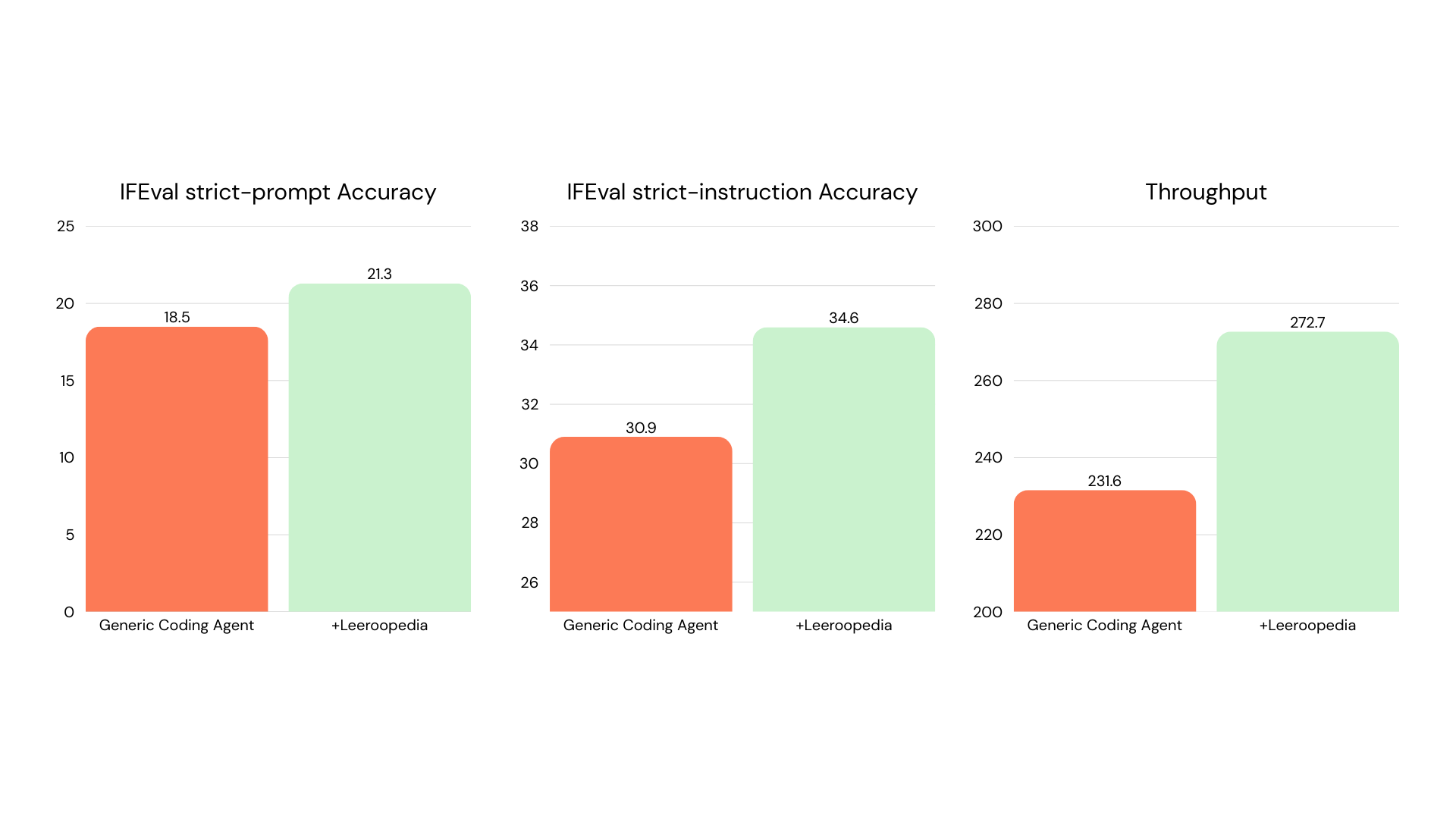
Implement a complete SFT + DPO fine-tuning, LoRA merge, vLLM serving, and IFEval evaluation pipeline forQwen/Qwen2.5-1.5B on 8×A100 GPUs.
Self-Evolving RAG
Build a FastAPI service that ingests a corpus, answers questions via hybrid retrieval-augmented generation, and automatically improves itself over multiple evolution rounds by diagnosing retrieval failures, re-chunking documents, and adapting query strategies.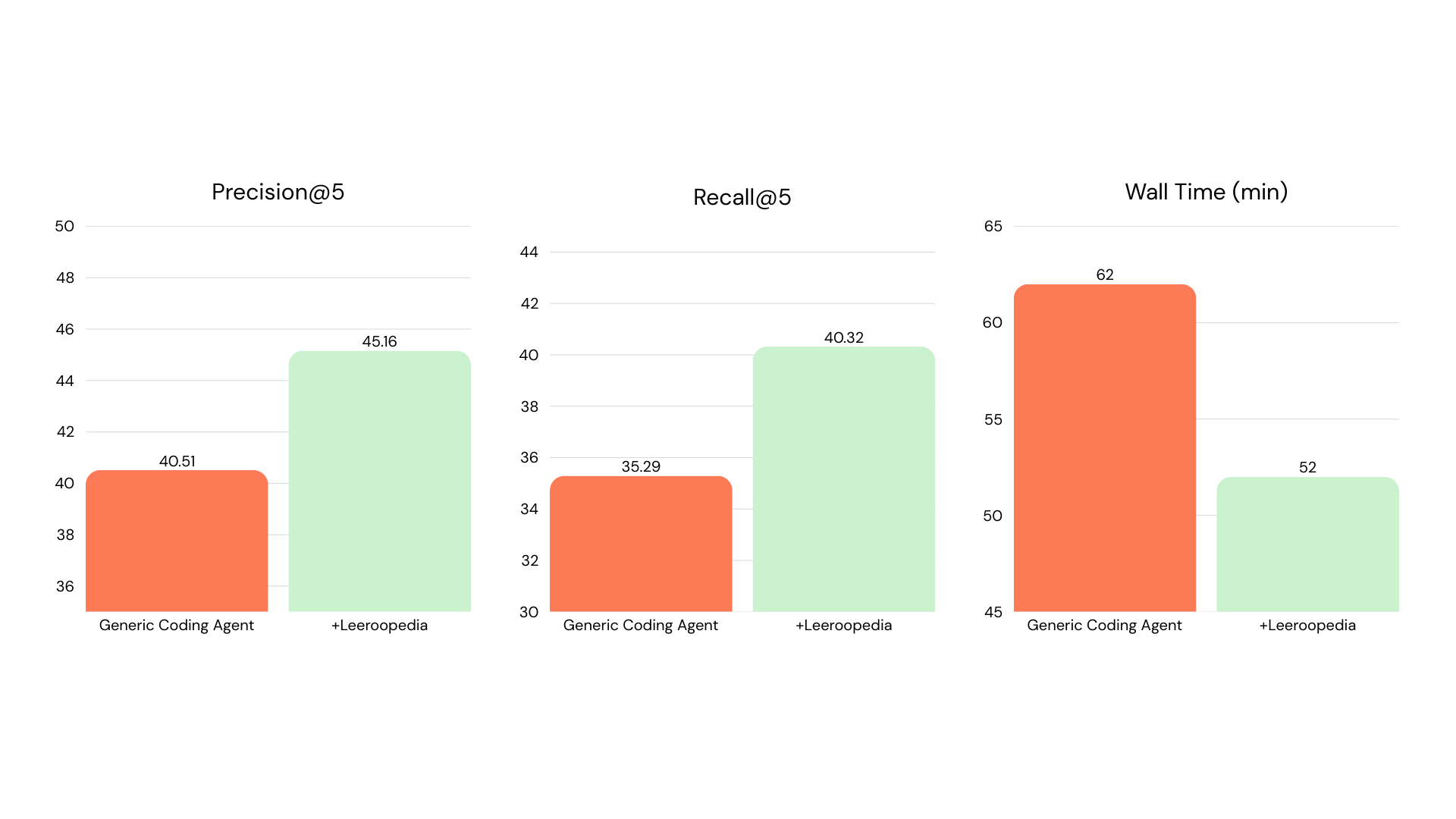
Customer Support Agent
Build a multi-agent system that classifies 200 customer support tickets into 27 fine-grained intent categories using agent handoffs, state persistence, and structured output.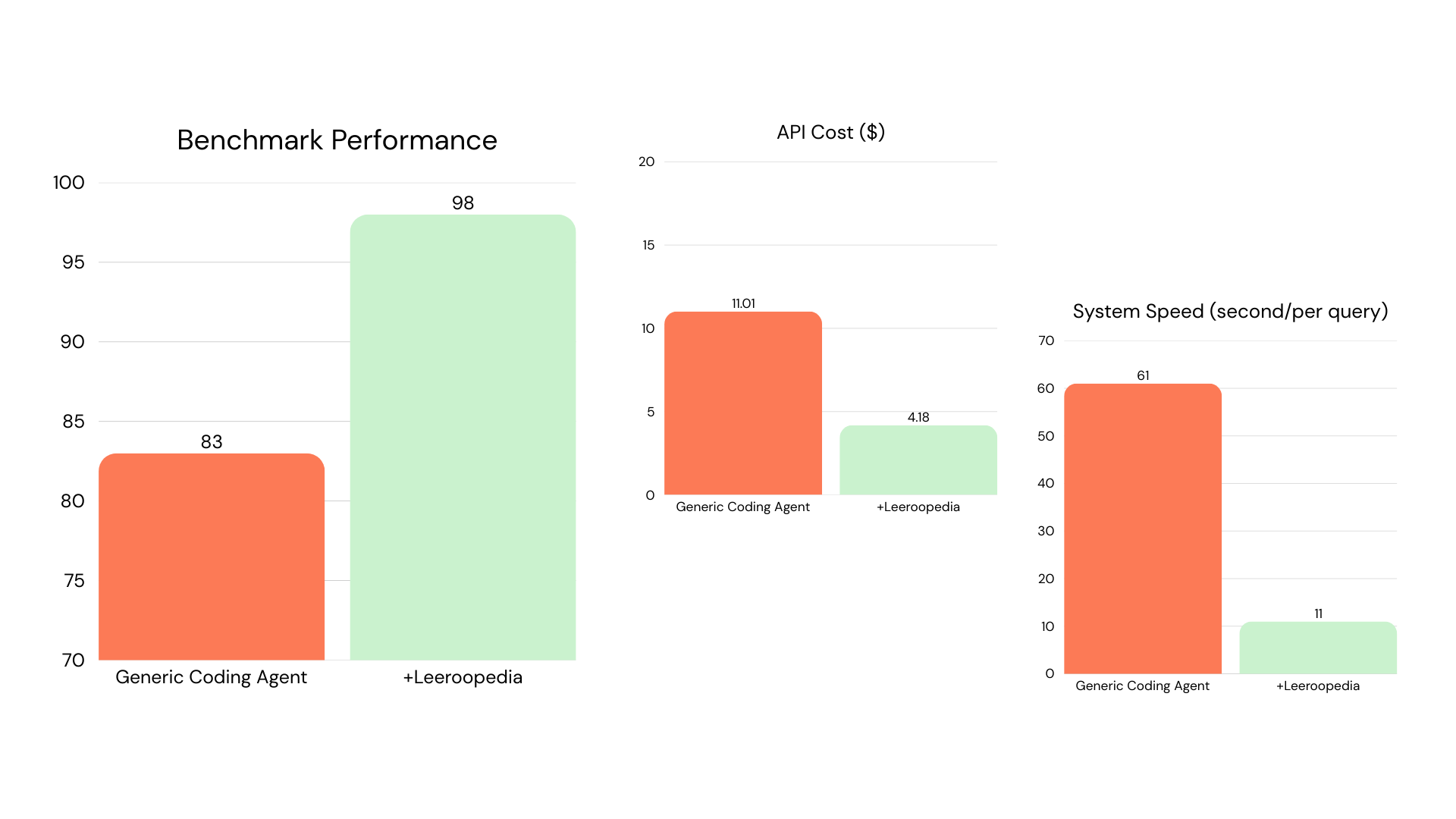
input_type, a framework-specific pattern in the OpenAI Agents SDK. The baseline used fragile regex extraction from free text, while the KB agent registered each handoff with a Pydantic model that the SDK enforces at handoff time. The KB also taught proper state serialization and output_type usage.
→ Full results and replication instructions